
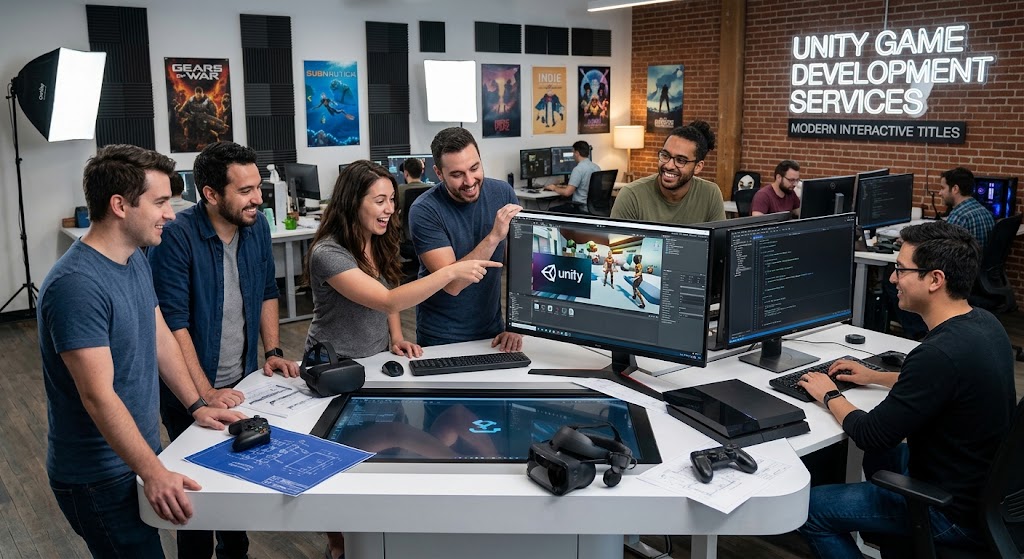
Unity Game Development Services: Building Tomorrow’s Hits
Building a great game takes more than just a neat idea. It demands precise engineering, tight art integration, and code that scales across dozens of hardware configurations. That is where professional unity game development services step into the frame. Whether you are aiming for a sleek mobile title, a detailed console experience, or an immersive VR application, working with seasoned engineers makes a world of difference.
Game production is notoriously tricky. Deadlines slip, performance drops on lower-end devices, and complex mechanics can crumble under poor architecture. Partnering with dedicated specialists keeps projects on track. You get instant access to refined pipelines, tested rendering setups, and proven backend integration strategies.
Let us talk straight about what actually goes into making a game succeed today. It is not about fancy buzzwords or overcomplicating simple mechanics. It is about clean execution, solid game loops, and delivering a smooth experience to your players from the very first frame.
Why Choose Unity Game Development Services for Your Project?
Unity powers a huge portion of today’s interactive market, and for good reason. It provides an insanely versatile foundation that handles 2D physics, 3D spatial rendering, real-time lighting, and cross-platform builds with equal reliability. But the engine itself is just a tool. The real value comes from how skilled developers utilize it.
When you hire specialized unity game development services, you cut down months of trial and error. Experienced teams understand how to structure C# scripts for maximum performance. They know how to optimize asset bundles, tweak memory allocations, and configure the Scriptable Render Pipeline so your visual fidelity never tanks your frame rates.
Another major advantage is platform reach. Unity allows developers to write core code once and deploy it across iOS, Android, PC, PlayStation, Xbox, Nintendo Switch, and WebGL. Managing multi-platform builds in-house can easily swamp your internal engineering team. External unity game development services take that operational burden off your shoulders, letting you focus strictly on game design and player engagement.
Here is a quick snapshot of how Unity compares to other traditional development paths across key operational metrics:
| Development Aspect | Standard Custom Engine | Unity Engine Pipeline |
|---|---|---|
| Multi-Platform Deployment | High effort, custom ports needed | Native cross-platform build support |
| Prototyping Speed | Slow, requires core setup | Fast, rich asset and tool ecosystem |
| Community & Plugin Support | Limited to internal documentation | Massive ecosystem and asset store |
| Talent Availability | Niche engineering required | Broad network of C# developers |
| Initial Setup Time | Months of core tool building | Immediate project start |
Speed to market is essential. The games industry moves fast, and player trends shift overnight. By leveraging pre-built frameworks, custom shaders, and modular code structures, unity game development services allow studios to publish prototypes quickly, test audience reaction, and iterate without blowing through budgets.
Core Capabilities Included in Unity Game Development Services
What exactly happens behind the scenes when you hire a game team? A full-cycle unity game development services team covers every stage of the production pipeline, ensuring no critical step gets skipped.
First comes initial technical discovery and architecture design. Teams analyze your game design document, break down core gameplay loops, and decide on software patterns. Using clean architecture like MVC or ScriptableObject-driven systems ensures your codebase stays manageable even as feature scope grows.
Next comes asset integration and shader setup. Artists build 3D models, textures, and animations, but tech artists bring them to life in Unity. They set up lighting rigs, particle systems, and visual effects tailored specifically to target hardware requirements. Proper asset handling prevents bloated download sizes and stuttering frame rates.
Here are the key technical areas professional unity game development services cover:
- Custom C# gameplay programming and character mechanics development.
- UI and UX design implementation with responsive layout auto-scaling.
- 2D and 3D graphics optimization using URP and HDRP rendering pipelines.
- Multiplayer networking setup via Unity Netcode, Photon, or custom sockets.
- Cross-platform porting, touch control adaptation, and gamepad mapping.
- Backend integrations for analytics, player authentication, and leaderboards.
Physics optimization is another huge area. Unity features built-in 2D and 3D physics engines, but misconfigured colliders and rigidbodies can cause severe lag. Experienced developers streamline raycasting, optimize collision matrices, and use object pooling so performance remains crisp during intense onscreen action.
Audio design and integration often get overlooked until the last minute. Yet, spatial sound and crisp dynamic audio cues define player immersion. Developers implement audio mixers, snapshot transitions, and spatialized 3D soundscapes that react dynamically to gameplay events, adding deep emotional weight to every action.
Consider the typical asset pipeline workflow used by professional unity game development services teams:
| Production Stage | Primary Focus | Key Deliverables |
|---|---|---|
| Pre-Production | Architecture & Prototyping | GDD alignment, graybox mechanics, technical stack |
| Production | Feature & Content Building | C# code, UI integration, visual effects, level assembly |
| Optimization | Performance & Memory Tuning | Draw call reduction, frame rate lock, garbage collection checks |
| QA & Testing | Bug Fixing & Build Validation | Stress testing, device compatibility, build delivery |
| Post-Launch | Live Operations & Updates | Patches, new content drops, server maintenance |
This structured workflow minimizes unpleasant surprises. You always know what state the project is in, what features are working, and what needs adjustment before public release.
Quality assurance runs parallel to development. Dedicated QA testers run automated scripts and manual playtests on actual hardware. They test edge cases like sudden network disconnects, low battery states, and background app switching, ensuring your players get a stable product.
LiveOps and monetization systems also require careful implementation. Whether your business model relies on rewarded video ads, in-app purchases, or battle passes, unity game development services build reliable purchasing logic. Secure backend transaction validation prevents fraud and protects your game revenue stream.
Here are crucial game monetization and engagement modules usually configured during development:
- In-App Purchase (IAP) store setup across Apple App Store and Google Play.
- Ad network mediation integration for rewarded and interstitial ads.
- Daily reward sequences and engagement progression tracks.
- Cloud saving systems to sync player progress across multiple devices.
- Real-time telemetry and event tracking to analyze player drop-off points.
With these elements in place, your team can make data-driven decisions post-launch. You can see where players get stuck, which items sell best, and how long typical game sessions last. That insight helps guide future content updates and event scheduling.
Outsourcing your Unity development needs also gives you immense scaling flexibility. You can ramp up engineering power during heavy production phases and scale back when moving into quiet maintenance periods. This keeps overhead predictable and avoids long-term staffing bloat.
Look at how modern studios structure their ongoing game updates. They rely on modular Unity Addressables to stream new visual content, audio tracks, and level files over the air without forcing players to download massive application updates from store pages every single month.
Here is why studios choose external unity game development services for long-term support:
- Access to senior C# talent without long recruitment and onboarding cycles.
- Predictable development costs through fixed-scope or dedicated team models.
- Proven experience handling app store approvals and compliance requirements.
- Reduced internal overhead for specialized hardware, like VR headsets and dev kits.
- Faster turnaround time on critical bug hotfixes and balance updates.
At the end of the day, making games should be exciting. Working with a competent partner removes technical stress so you can concentrate on building fun, memorable player experiences.
Frequently Asked Questions
What Are Unity Game Development Services?
Unity game development services represent professional engineering, design, art, and quality assurance solutions dedicated to creating interactive games and real-time applications using the Unity engine. These teams help clients take games from initial concept through coding, optimization, app store publishing, and post-launch updates.
How Much Does It Cost to Hire Unity Developers?
Costs vary significantly depending on scope, visual complexity, platform choices, and backend requirements. A simple 2D mobile prototype may cost a few thousand dollars, while full-scale multi-platform 3D games with online multiplayer can reach much higher budgets. Working with established unity game development services provides clear milestone pricing tailored to your requirements.
Why Is Unity Popular for Cross-Platform Games?
Unity provides built-in tools that allow developers to write game code once in C# and deploy it across mobile, desktop, console, and web platforms with minimal code changes. This unified engine architecture drastically lowers development timelines and maintenance effort compared to writing custom native engines for each target device.
Can Unity Handle High-End 3D Visuals?
Yes. With Unity’s High Definition Render Pipeline (HDRP), developers can produce film-quality graphics, real-time lighting, advanced volumetric fog, and physically based rendering. Combined with custom shaders and high-detail asset workflows, unity game development services can deliver stunning visual experiences suitable for PC and modern consoles.
How Long Does It Take to Develop a Unity Game?
Timeline depends heavily on game complexity. A basic casual mobile game can take two to four months to complete. A feature-rich 3D action game or complex multiplayer title often requires eight to eighteen months of development. Experienced unity game development services establish realistic project roadmaps during pre-production to keep milestones clear.
Do I Own the Source Code After Development?
In standard commercial agreements with reputable unity game development services teams, full intellectual property rights, source code, and assets belong entirely to the client upon project completion. Always verify that your development contract includes clear IP assignment clauses prior to kicking off work.
Can an Existing Game Be Ported to Unity?
Yes. Teams frequently port legacy titles or games built on other frameworks into Unity to improve performance, unlock cross-platform deployment, or modernise visual styling. Professional unity game development services rebuild core logic in C# while preserving original gameplay physics and asset structures.
Choosing the right unity game development services team sets your title up for sustained technical and commercial success. With clear planning, solid code architecture, and disciplined performance optimization, your game idea can seamlessly transition into a polished, playable reality that captivates audiences across every device platform.
Leave a Reply