
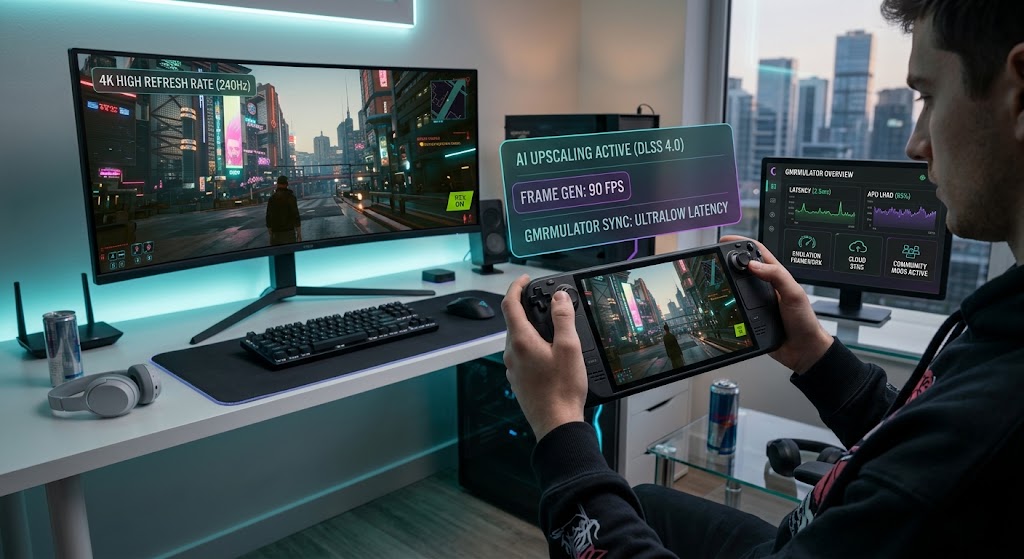
Newest Gaming Trends Gmrrmulator Overview and Industry Shifts
Gaming moves faster than ever these days. If you take a break for a couple of months, you come back to new hardware, fresh software frameworks, and entirely new ways people interact with virtual worlds. Staying on top of every newest gaming trends gmrrmulator pattern requires looking at both modern blockbusters and nostalgic emulation spaces.
Players want faster load times, deeper stories, and total control over their gaming setups. They want seamless streaming from localized rigs to handheld screens in their living rooms. At the same time, classic console simulation and custom hardware tweaks have taken over enthusiast forums.
So, why are people tracking the newest gaming trends gmrrmulator so closely? Because understanding where interactive entertainment is headed helps developers build better experiences and helps gamers invest in the right platforms.
Let us break down what is actually happening in the market right now without any unnecessary fluff or corporate buzzwords. Here is what you need to know about modern performance demands and software evolving around us.
Understanding the Newest Gaming Trends Gmrrmulator Modern Ecosystem
The modern ecosystem is built around flexibility. Gone are the days when you were locked into sitting at a desk with a massive tower just to enjoy high-fidelity titles. Handheld gaming PCs have surged in popularity, bridging the gap between mobile convenience and desktop graphical power.
Because hardware is becoming more compact, software optimization must work twice as hard. Upscaling technologies powered by machine learning algorithms are doing heavy lifting across mid-tier devices. They render frames at lower native resolutions and blow them up to crisp detail without tanking frame rates.
Another big aspect of the newest gaming trends gmrrmulator shift involves cross-platform connectivity. Gamers demand that their save files, friend lists, and cosmetic purchases travel across PC, mobile, and console boundaries. When a game fails to support this basic feature, players quickly move on to something else.
Cloud gaming services have also settled into a practical niche. While they have not completely replaced traditional physical hardware or local SSD storage, they offer quick trials and instant access to heavy titles. Gamers love being able to jump into a match while waiting for a massive 100-gigabyte update patch to finish downloading.
Community modifications and user-generated content continue to drive longevity. Games built with robust modding toolkits tend to survive for decades rather than months. Dedicated fan bases actively update older titles, applying custom ray-tracing shaders and refining asset quality.
Key Architectural Pillars of the Newest Gaming Trends Gmrrmulator
Behind every smooth gaming session sits a complex web of hardware architecture and backend systems. As display technology pushes toward higher refresh rates like 240Hz and beyond, every bottleneck matters. Processing units, memory bandwidth, and thermal management determine how stable a system remains under heavy loads.
Solid-state drives utilizing high-speed PCIe channels have eliminated traditional loading screens in modern titles. Developers now design game worlds assuming that data streams instantly from storage straight into video memory. This shifts direct pressure off system memory and creates seamless world transitions.
Here is a detailed breakdown comparing recent industry shifts across primary performance metrics:
| Gaming Trend Sector | Primary Hardware Focus | Key Benefit for Gamers | Average Latency Impact |
|---|---|---|---|
| Handheld Gaming PCs | Custom APUs & High-Speed LPDDR5 | Full library mobility and offline play | Low (Native Execution) |
| Cloud Streaming Services | Server-grade GPUs & Fiber Routing | Zero install times on low-end screens | Variable (Network Dependent) |
| AI-Driven Upscaling | Tensor & Neural Processing Cores | Higher frame rates at high resolutions | Minimal (1-3ms Frame Gen) |
| Retro System Emulation | Multi-threaded CPU Architecture | Preservation and enhanced resolution | Very Low (With Sync Shaders) |
Emulation software has seen remarkable breakthroughs over the past few years. Programmers have mapped intricate microarchitectures from older hardware consoles into efficient multi-threaded computer instructions. This preserves gaming history while giving old titles sharp visual updates, custom framerate unlocks, and texture replacements.
When analyzing these shifts, we see clear benefits across hardware classes. Check out these essential factors driving current player choices:
- Instant suspension and resumption of active gaming sessions on portable devices.
- Open-source software drivers that boost performance on Linux-based operating systems.
- Adaptive variable refresh rate technology eliminating screen tearing across external monitors.
- Custom shader caches that prevent stuttering during intense action sequences.
- Advanced haptic feedback motors built directly into modern gamepads for immersive rumble.
Thermal design has become a primary selling point for hardware builders. Portable devices require smart fan curves and copper heat pipes to maintain top clock speeds without burning user hands. If a handheld gets too hot, thermal throttling drops frame rates immediately.
Power efficiency matters just as much as raw speed. Silicon manufacturers are tweaking architecture layouts to squeeze maximum instructions per clock cycle out of limited wattages. This allows battery-powered systems to run demanding titles for hours on end.
Operating system integration plays a major role too. Custom frontends simplify launcher management, aggregating games from various storefronts into one neat interface. Players no longer want to hunt through five different programs just to find what they want to play.
Software Enhancements and Hardware Convergence
Software developers and hardware makers are working together more closely than ever. Custom graphics drivers are published alongside major blockbuster releases to resolve bugs before millions of players hit start. This close cooperation ensures system memory stays clean and frame times remain consistent.
Physics simulation, environmental audio, and real-time lighting calculations consume vast amounts of CPU cycles. By offloading specialized mathematical tasks to targeted processing units, core processor threads remain open to handle artificial intelligence paths and player input commands instantly.
Here is how hardware configurations line up against current gaming software requirements:
| Hardware Level | Target Resolution | Recommended RAM | Ideal Storage Type |
|---|---|---|---|
| Budget Portable | 720p / 800p Native | 16 GB LPDDR5 | NVMe PCIe Gen 3 SSD |
| Mid-Range Desktop | 1080p / 1440p Upscaled | 16 GB – 32 GB DDR5 | NVMe PCIe Gen 4 SSD |
| Enthusiast Rig | 4K High Refresh Rate | 32 GB – 64 GB DDR5 | NVMe PCIe Gen 4/5 SSD |
| Living Room Media Box | 4K 60 FPS Target | 16 GB Unified Memory | High-Speed Internal SSD |
Audio processing has also taken a massive leap forward. Spatial audio engines track sound sources in three-dimensional space, giving competitive players precise spatial awareness. Hearing an enemy footsteps behind a wall can make the difference between winning and losing a round.
Input latency reduction technologies continue to mature. By dynamically synchronizing CPU work directly with GPU frame submission, controller inputs reflect almost instantly on screen. Every millisecond shaved off input lag creates a snappier, more responsive feeling game environment.
To optimize your modern gaming setup effectively, keep these core practical strategies in mind:
- Install operating system updates and GPU display drivers regularly to maintain peak stability.
- Cap frame rates slightly below your monitor display maximum refresh rate to reduce latency.
- Store heavy open-world games on fast NVMe drives to eliminate asset pop-in issues.
- Enable dynamic resolution scaling when targeting high refresh rates on mid-range builds.
Community feedback loops are faster than ever thanks to social media platforms and direct community channels. Developers run open beta tests, gather performance logs from thousands of configurations, and issue patches within days. This real-time tweaking keeps dynamic titles balanced and technical bugs down.
Modding communities also pioneer optimization techniques that official studios sometimes adopt later. Fan-made dynamic resolution patches, memory leak fixes, and custom ultrawide screen support hacks routinely breathe second lives into buggy titles.
Indie game developers benefit directly from modern engine toolkits. Smaller teams can build visually stunning experiences without needing multi-million dollar custom tech stacks. This levels the playing field and brings unique game concepts to market faster.
Future Outlook for Gaming Technology and Player Ecosystems
Looking ahead, the line between dedicated home consoles, local desktop computers, and remote cloud infrastructure will continue to blur. Gamers care far less about where processing happens and far more about immediate access, low latency, and playing alongside friends on any hardware platform.
Open standards in graphics APIs allow code to run efficiently across different operating systems without heavy emulation overhead layers. This move toward cross-platform compatibility ensures games stay playable long after original console hardware disappears from store shelves.
Preservation projects led by passionate software engineers ensure retro titles remain accessible for future generations. Emulators continue to refine timing accuracy, enabling modern systems to run historical games exactly as original creators intended decades ago.
Here are several key software practices that keep modern titles running smoothly:
- Pre-compiling pipeline shaders during initial game launch menus to eliminate mid-game micro-stutters.
- Implementing direct storage access routines to move textures straight from SSDs to video memory.
- Utilizing spatial audio algorithms that calculate dynamic acoustic reflection off virtual walls.
- Leveraging asynchronous compute pipelines to process lighting calculations alongside geometry render passes.
Hardware power consumption will stay under heavy scrutiny as portable gaming setups expand further. Efficient battery technology, combined with smart background power management, will allow extended gaming sessions without sacrificing graphical fidelity.
Cross-play voice chat networks and unified social overlays make jumping into group matches frictionless. No matter what screen you choose, connecting with friends requires just a quick button press, unifying divided player bases across competing ecosystems.
Ultimately, modern hardware trends and clever software engineering exist to serve one core goal: putting great games in front of passionate players. The closer technology gets to removing friction, the richer our interactive digital experiences become.
Frequently Asked Questions
What Is the Newest Gaming Trends Gmrrmulator System?
The newest gaming trends gmrrmulator system refers to the evolving landscape of gaming hardware setups, emulation software, and modern system tuning techniques. It represents how players optimize high refresh rate performance, handheld gaming systems, and cross-platform compatibility for seamless gameplay experiences across modern platforms today.
How Does Emulation Performance Improve on Modern Hardware?
Modern CPUs offer fast single-core speeds and instruction sets designed specifically for efficient math processing. Emulators leverage these features alongside multi-threaded task management to simulate classic console hardware accurately, allowing higher rendering resolutions, custom frame rates, and post-processing visual shaders on modern monitors.
Why Are Handheld Gaming PCs Becoming So Popular Recently?
Handheld gaming PCs combine the portable convenience of traditional mobile devices with the massive software libraries of personal computers. Modern low-power processor chips deliver strong graphical capabilities, allowing gamers to take demanding PC titles anywhere without losing save file synchronization across home platforms.
What Role Does AI Upscaling Play in Current Games?
AI upscaling renders games at lower internal resolutions to save performance, then reconstructs image detail using neural networks before displaying frames. This produces sharp visuals close to native resolution while dramatically increasing frame rates on mid-range hardware and extending battery life on portable systems.
How Can Gamers Reduce Input Latency on Modern Screens?
Players can lower input lag by enabling low-latency driver modes, disabling heavy post-processing effects like motion blur, using wired controllers, and capping frame rates just below their monitor refresh rate. Enabling variable refresh rate technologies like G-Sync or FreeSync also maintains smooth visual output.
Why Is Direct Storage Access Important for Modern Titles?
Direct storage access bypasses traditional system processor bottlenecks by copying compressed asset data straight from fast NVMe drives directly into video memory. This cuts down loading screens to mere seconds and prevents hitching as vast open-world maps stream detail during fast player movement.
How Do Cross-Platform Saves Benefit Modern Gamers?
Cross-platform save systems store player progression in cloud accounts, letting users switch between home consoles, portable devices, and gaming PCs without losing quest progress or inventory items. It offers flexible play options suited to changing schedules throughout the day.
To wrap things up, following the newest gaming trends gmrrmulator helps you make smarter choices whether you are building a custom PC rig, setting up a handheld console, or exploring classic game emulation libraries. Tech will keep evolving, but prioritizing smooth performance, low input latency, and easy cross-platform play will always keep your setup running at its absolute best.
Leave a Reply